The best Booksy alternative for tattoo artists is Porter, tattoo shop management software and a tattoo booking app built around how custom tattoos are actually requested, quoted, deposited, and paid out. Artists who want a free option can run a basic workflow on Google Sheets and Google Docs, as long as they're willing to handle deposits, reminders, and commission math by hand.
Key Takeaways
- Booksy is built for menu-based businesses such as barbershops, salons, and spas. Custom tattoos need a request, a review, and a quote before anything is scheduled.
- Boost is a recurring complaint in Booksy business reviews. Booksy's pricing page lists it as a one-time 30% commission on a new marketplace client's first visit, capped at $100, so most first tattoo sessions hit the cap.
- Porter collects placement, size, budget, and reference images before an artist accepts a request, then lets the client choose a time and pay the deposit in one step.
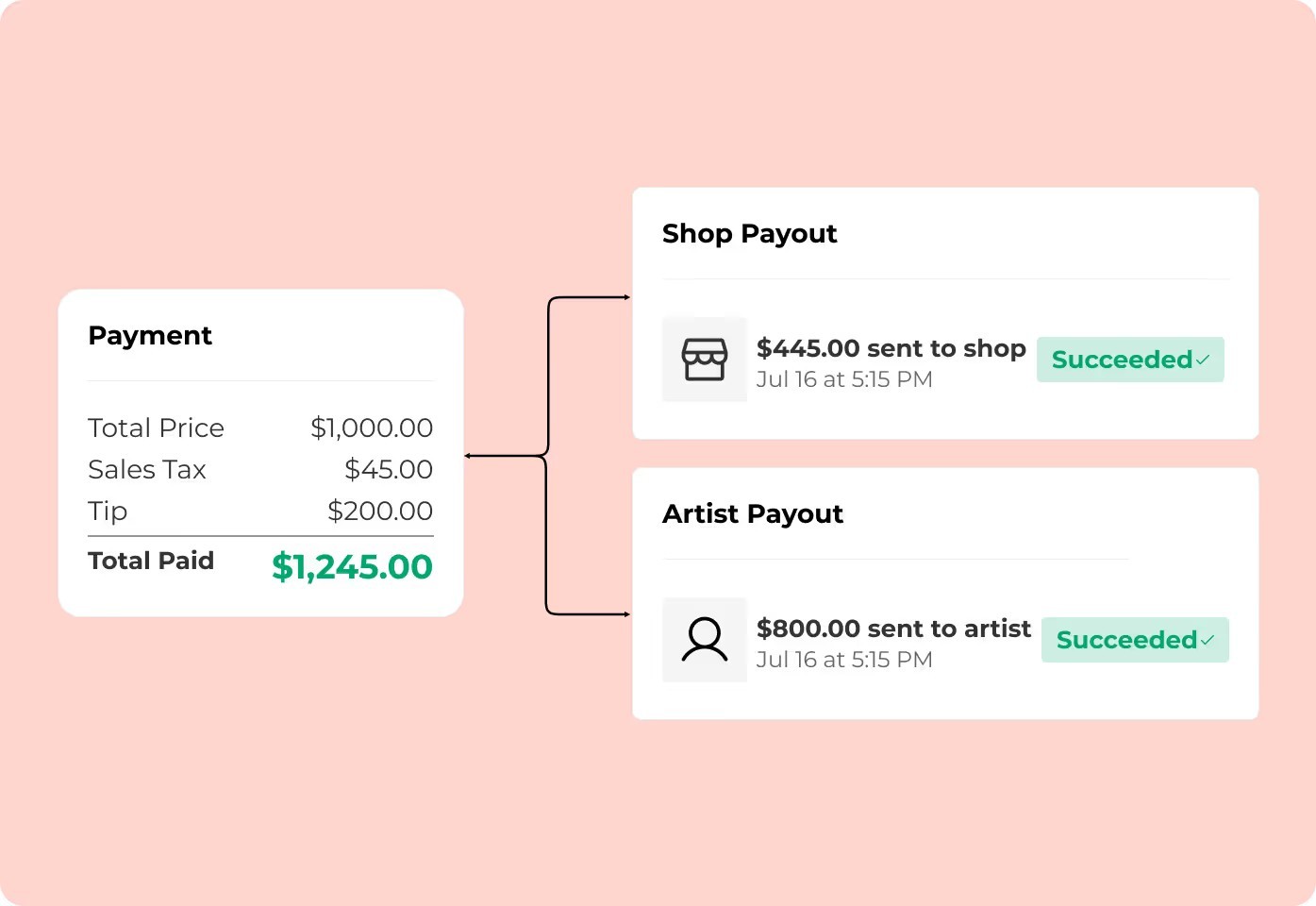
- Porter can split each card payment between the shop and the artist at checkout and send each share to its own bank account.
Why do tattoo artists look for Booksy alternatives?
Based on Booksy business reviews on Trustpilot and the Apple App Store, tattoo artists look for alternatives for three main reasons: Boost commissions that get expensive at tattoo prices, a booking model designed around fixed services, and frustration with support and account control. Booksy serves barbers and stylists well. It wasn't designed around tattooing.
Boost commissions add up fast at tattoo prices
Boost is Booksy's optional marketplace promotion. As of October 2026, Booksy's pricing page lists a one-time fee of 30% of a Boost client's first visit, up to $100, with no commission on clients who book through the business's own link. On a $40 haircut, that's $12. On a $400 first tattoo session, it's the full $100.
The bigger frustration in reviews isn't the rate. It's attribution. Several business owners on Trustpilot and the App Store report being charged Boost commissions for clients they believed came through their own website or booking link, and some say their disputes were denied. Booksy ties the charge to how the client booked, so a client who finds you inside the Booksy app instead of through your link can count as a Boost client.
A service menu doesn't fit a custom tattoo
Booksy Biz lists barbershops, hair salons, nail salons, lash and brow studios, massage, and spas among the businesses it serves. Tattoo studios aren't on that list. A menu-based booking flow works for a fade. It works less well for a custom half sleeve, where the artist needs placement, size, style, budget, and reference images before deciding whether to take the piece, how long it will run, and what to charge.
As of October 2026, Booksy's public product pages don't describe a tattoo intake form or reference image uploads. That doesn't prove the capability is missing, so test how a custom request with photos would reach you. Without that step, the real conversation moves back into Instagram DMs.
Support and control over client data
Recent Trustpilot reviews from business owners describe slow support replies, features switched on without the owner's permission, and trouble exporting a client list. For a tattoo artist, the client list is the business: repeat clients, unfinished sleeves, and touch-ups all depend on that history.
Porter: the best Booksy alternative for tattoo artists
Porter is tattoo shop management software and a tattoo booking app built for independent artists, multi-artist studios, and multi-location shops. Here's how Porter handles the problems above.
Requests arrive complete. Each artist gets a personal booking link for Instagram or a website, and shops can add a shop-wide request form. Porter's custom booking forms collect placement, size, color or black and gray, budget, and as many reference images as the client wants to add.

Artists accept, quote, and collect a deposit in one flow. When an artist accepts a request in Porter, they choose a tattoo session or a consultation, set fixed, range, or hourly pricing, and set the deposit and session length. The client then picks from openings long enough for that session and pays the deposit to lock it in, without downloading an app.
No commission on new clients. Porter doesn't take a cut of a client's first visit. Client visit history, spending, and notes stay in the shop's Porter client profiles.
Waivers are part of the appointment. Porter sends digital tattoo consent forms on the day of the appointment, with optional ID verification, and attaches the signed form to the appointment.
Artist pay happens at checkout. For commission-based shops, Porter can split each card payment by the artist's commission percentage and send the artist's share directly to their bank account, typically within one to two business days. Booksy calculates commissions and tips for payroll. Porter's artist commission splits move the money.
Porter also sends SMS reminders 48 hours and one hour before appointments, follows up with aftercare and Google review requests, and offers free data transfer for client records, notes, services, and future appointments.
How much does Booksy cost compared with Porter?
As of October 2026, the published prices look like this:
- Booksy: $29.99 per month for one staff member, plus $20 per month for each additional user. Boost is optional and billed per new client.
- Porter: Artist Essentials at $35 per month, Artist Pro at $65 per month, and Studio Pro at $250 per month with unlimited artists and staff.
On subscription alone, Booksy is cheaper. A solo artist saves about $5 to $35 a month, and a six-artist shop pays about $130 a month on Booksy versus $250 on Porter. Boost changes that quickly: two Boost clients at tattoo prices add about $200 in commissions, putting that shop above Porter's price for the month. Compare the full stack you'd pay for, including any separate waiver or payout tool.

When is Booksy the better fit?
Booksy can make sense for a piercer or flash-heavy artist with fixed-price, fixed-length services, or a studio that wants exposure on a large consumer marketplace and accepts the Boost cost. Booksy also supports deposits and card-on-file cancellation fees, so basic no-show protection is covered.
If you're weighing other general booking platforms too, see Porter's comparisons of Square Appointments alternatives for tattoo artists and Vagaro alternatives for tattoo shops.
The free option: Google Sheets and Google Docs
Google Sheets and Google Docs can run a basic tattoo booking workflow for $0. A typical setup looks like this:
- A Google Sheet as the booking log, with the client, piece, placement, deposit status, and session date.
- Google Docs for the waiver and consent template, deposit policy, and aftercare instructions.
- A second Sheet tab for calculating artist commissions at the end of the week.
This works for an artist booking a handful of mostly repeat clients a month. The tradeoff is that nothing happens on its own. Reference images arrive in DMs, deposits come through payment apps and get matched by hand, reminders depend on memory, and a waiver in a Google Doc still has to be sent, signed, and filed.
In a multi-artist shop, the spreadsheet is only as accurate as the least organized artist.
Frequently Asked Questions
How much does Booksy Boost cost a tattoo artist?
As of October 2026, Booksy Boost charges a one-time commission of 30% of a new Boost client's first visit, capped at $100. Any first session above about $334 hits the cap. Booksy says bookings through the business's own link are commission-free.
Can I move my clients from Booksy to Porter?
Porter offers free data transfer from other booking software, covering client records, notes, services, and future appointments. Porter's team sets up the account and manages the move.
Choosing the right Booksy alternative
If you book custom tattoos, take deposits before confirming, collect waivers, or pay artists on commission, Porter handles those steps in one tattoo-specific workflow. See Porter for tattoo artists or explore Porter for tattoo studios.