
Tattoo shop owner pointing at the Porter card reader in a bright tattoo studio

Vagaro Alternatives for Tattoo Shop Owners and Artists

If you run a tattoo shop or work as a tattoo artist and you're looking at Vagaro alternatives, the short answer is that Vagaro was not built for tattooing. It's a booking and business management platform for the beauty, wellness, and fitness industries broadly, covering everything from hair salons to gyms to spas. Porter is tattoo shop management software and a tattoo booking app built specifically for tattoo studios and artists, and it's the alternative most worth evaluating if your day-to-day workflow revolves around tattoo requests, deposits, artist commissions, and consent forms rather than a fixed service menu.

This article covers where Vagaro's generalist design creates friction for tattoo-specific workflows, what shop owners and artists commonly report in public reviews, and what Porter does differently because it was built around tattooing from the start.

Key takeaways

  • Vagaro is built for the beauty, wellness, and fitness industries as a whole, using a general service menu and calendar model rather than a workflow designed around tattoo requests, custom pricing, and reference images.
  • Public reviews of Vagaro point to recurring friction around checkout speed, hardware reliability, and a pricing structure that adds a fee per additional bookable calendar plus paid add-ons for advanced reporting.
  • Porter is built around the tattoo-specific booking cycle: custom intake with placement, size, and reference photos, flexible per-appointment pricing, deposits, automated artist commission splits, and mobile waivers with secure ID upload.
  • Clients booking through Vagaro are generally required to create a Vagaro account first. Porter's booking flow doesn't require the client to download an app or create a profile.
  • Porter's Studio Pro plan covers unlimited artists and staff at a flat monthly rate, rather than charging per bookable calendar or employee seat the way Vagaro does.

Why tattoo shops look for a Vagaro alternative

Tattoo appointments don't behave like most of the appointments Vagaro was designed around. A haircut takes a predictable amount of time and follows a service menu. A tattoo session doesn't. Placement, size, style, and the artist's own pricing method (flat rate, hourly, or a price range) all change how long an appointment takes and what it costs, and none of that is known until the artist reviews the request.

Shop owners and artists who move from a generalist platform to a tattoo-specific one usually aren't chasing a new interface. They're trying to stop translating their actual workflow into software built for a different kind of business.
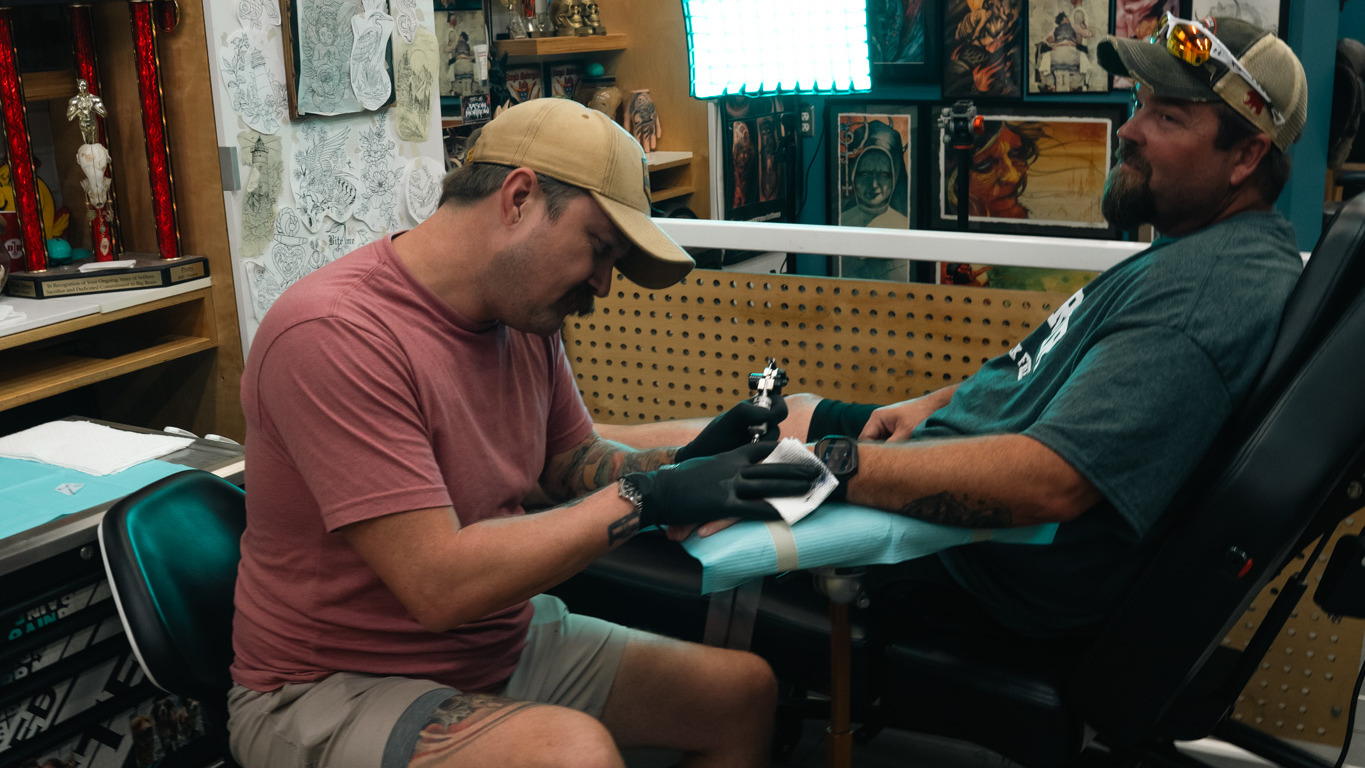
Tattoo artist working on a client's forearm in a tattoo studio

What Vagaro is actually built for

Vagaro describes itself as business management software for the beauty, wellness, and fitness industries, serving salons, spas, gyms, and similar businesses on one shared platform. That's a legitimate and successful category. It's also a different category from tattooing.

Vagaro's payroll tools do support flat and percentage-based commission calculations, and its booth rental feature can automatically deduct rent and product commission from a renter's account instead of collecting it by cash or check, which is a real strength for a multi-service salon. But none of it is tattoo-specific. There's no intake workflow built around placement, size, style, budget, and reference imagery, and appointment pricing follows a service-menu model rather than a per-piece quote. Independent comparisons of tattoo-specific tools have described Vagaro's approach as "one size fits most" rather than built around any single trade's operational needs.

Where owners and artists report friction with Vagaro

These points come from public reviews on Trustpilot, Capterra, and independent software comparison sites, current as of September 2026. Experiences vary, so treat these as recurring themes rather than universal guarantees.

Booking and intake aren't built around tattoo requests. Vagaro's flow selects a service and staff member from a menu, then a time slot. It wasn't designed to collect placement, size, style, budget, or reference photos before a request reaches the artist, so shops typically end up gathering that information through a separate form, a DM, or a phone call anyway.

Clients must create an account to book. Independent reviews note that Vagaro generally requires clients to create an account before completing a booking, even for a business they're contacting for the first time. That's friction at exactly the point an artist wants the fewest possible barriers between interest and a submitted request.

Checkout speed and hardware issues show up repeatedly. A Capterra reviewer described "line-ups at the front desk waiting for screens to load" as their biggest complaint, along with difficulty pulling up a full receipt quickly. A Trustpilot reviewer reported that Vagaro's card reader didn't work reliably and they had to fall back on a different processor.

Pricing scales with calendars, employees, and add-ons. Vagaro's base plan starts around $30/month for one bookable calendar, with additional calendars priced separately, and advanced reporting is a paid add-on on top of that. Several Capterra reviewers specifically cite the pricing becoming confusing once add-ons are factored in.

No tattoo-specific consent and ID verification workflow. Waivers in a tattoo shop need to capture medical history, ID verification, and consent tied to a specific artist and appointment. Public documentation of Vagaro's feature set doesn't describe a tattoo-specific consent and ID verification workflow, and we couldn't verify one as of September 2026.

How Porter handles the same workflows

Two tattoo shop staff members using the Porter device at the front desk

Custom tattoo intake instead of a service menu. Every artist can build a custom booking form collecting placement, size, style, budget, and reference photos before the request ever reaches them. The artist reviews a fully formed request, not a blank calendar hold.

Pricing that matches how tattoos are actually priced. Porter lets an artist quote a fixed price, an hourly rate, or a price range per request, then collect a deposit against that quote, with appointment length set per booking rather than pulled from a standardized service duration.

Automated artist commission splits. When a payment processes through Porter, it can automatically split that payment between the shop and artist based on each artist's configured commission percentage, sending each portion to the right account as part of the transaction. Commission changes only apply going forward, so past payout records stay accurate.

Waivers with secure ID upload. Clients complete a mobile consent form tied to their specific appointment and upload a front and back photo of their ID, which Porter verifies as authentic. Completed waivers are stored and searchable inside the platform.

A walk-in queue and flash book built for tattoo shops. Clients can scan a QR code to join a walk-in queue and fill out a custom form on their own phone, and artists can upload flash designs clients book directly from, rather than asking about them one by one.

Pricing built around unlimited artists. Porter's Studio Pro plan is a flat monthly rate that includes unlimited artists and shop staff, automated commission splits, and general shop booking requests, rather than charging per calendar or per employee.

Porter call to action: power your studio with software designed specifically for tattoos. Get started.

FAQ

Is Vagaro built specifically for tattoo shops?

No. Vagaro is business management software for the beauty, wellness, and fitness industries broadly, covering salons, spas, gyms, and similar businesses on a shared platform. It's not designed around tattoo-specific workflows like variable appointment pricing, reference image collection, or artist commission automation.

What is the best Vagaro alternative for a tattoo shop?

Porter is built specifically for tattoo artists and tattoo studios, with custom intake forms, deposit collection, automated commission splits, mobile waivers with ID verification, and a walk-in queue designed around how tattoo shops actually operate. For a wider look at tattoo-specific options, see our guide to the best tattoo shop management software.

Does Porter work for a single independent artist, not just a shop with multiple artists?

Yes. Porter offers Artist Essentials and Artist Pro plans for individual and independent artists, in addition to its Studio Pro plan for shops with multiple artists and staff.

Can tattoo booking software automatically split commission between shop and artist?

Porter can automatically split a processed payment based on each artist's configured commission percentage, sending each party's portion directly to their account as part of the transaction. Commission changes only apply to appointments booked after the change.

Does switching from Vagaro to Porter mean losing existing client records?

Client and appointment data can generally be exported from Vagaro and brought into Porter through its free data transfer during onboarding. Confirm the specific migration process with Porter's onboarding team before switching.

If you run a tattoo shop or work as a tattoo artist and you're looking at Vagaro alternatives, the short answer is that Vagaro was not built for tattooing. It's a booking and business management platform for the beauty, wellness, and fitness industries broadly, covering everything from hair salons to gyms to spas. Porter is tattoo shop management software and a tattoo booking app built specifically for tattoo studios and artists, and it's the alternative most worth evaluating if your day-to-day workflow revolves around tattoo requests, deposits, artist commissions, and consent forms rather than a fixed service menu.

This article covers where Vagaro's generalist design creates friction for tattoo-specific workflows, what shop owners and artists commonly report in public reviews, and what Porter does differently because it was built around tattooing from the start.

Key takeaways

  • Vagaro is built for the beauty, wellness, and fitness industries as a whole, using a general service menu and calendar model rather than a workflow designed around tattoo requests, custom pricing, and reference images.
  • Public reviews of Vagaro point to recurring friction around checkout speed, hardware reliability, and a pricing structure that adds a fee per additional bookable calendar plus paid add-ons for advanced reporting.
  • Porter is built around the tattoo-specific booking cycle: custom intake with placement, size, and reference photos, flexible per-appointment pricing, deposits, automated artist commission splits, and mobile waivers with secure ID upload.
  • Clients booking through Vagaro are generally required to create a Vagaro account first. Porter's booking flow doesn't require the client to download an app or create a profile.
  • Porter's Studio Pro plan covers unlimited artists and staff at a flat monthly rate, rather than charging per bookable calendar or employee seat the way Vagaro does.

Why tattoo shops look for a Vagaro alternative

Tattoo appointments don't behave like most of the appointments Vagaro was designed around. A haircut takes a predictable amount of time and follows a service menu. A tattoo session doesn't. Placement, size, style, and the artist's own pricing method (flat rate, hourly, or a price range) all change how long an appointment takes and what it costs, and none of that is known until the artist reviews the request.

Shop owners and artists who move from a generalist platform to a tattoo-specific one usually aren't chasing a new interface. They're trying to stop translating their actual workflow into software built for a different kind of business.

Tattoo artist working on a client's forearm in a tattoo studio

What Vagaro is actually built for

Vagaro describes itself as business management software for the beauty, wellness, and fitness industries, serving salons, spas, gyms, and similar businesses on one shared platform. That's a legitimate and successful category. It's also a different category from tattooing.

Vagaro's payroll tools do support flat and percentage-based commission calculations, and its booth rental feature can automatically deduct rent and product commission from a renter's account instead of collecting it by cash or check, which is a real strength for a multi-service salon. But none of it is tattoo-specific. There's no intake workflow built around placement, size, style, budget, and reference imagery, and appointment pricing follows a service-menu model rather than a per-piece quote. Independent comparisons of tattoo-specific tools have described Vagaro's approach as "one size fits most" rather than built around any single trade's operational needs.

Where owners and artists report friction with Vagaro

These points come from public reviews on Trustpilot, Capterra, and independent software comparison sites, current as of September 2026. Experiences vary, so treat these as recurring themes rather than universal guarantees.

Booking and intake aren't built around tattoo requests. Vagaro's flow selects a service and staff member from a menu, then a time slot. It wasn't designed to collect placement, size, style, budget, or reference photos before a request reaches the artist, so shops typically end up gathering that information through a separate form, a DM, or a phone call anyway.

Clients must create an account to book. Independent reviews note that Vagaro generally requires clients to create an account before completing a booking, even for a business they're contacting for the first time. That's friction at exactly the point an artist wants the fewest possible barriers between interest and a submitted request.

Checkout speed and hardware issues show up repeatedly. A Capterra reviewer described "line-ups at the front desk waiting for screens to load" as their biggest complaint, along with difficulty pulling up a full receipt quickly. A Trustpilot reviewer reported that Vagaro's card reader didn't work reliably and they had to fall back on a different processor.

Pricing scales with calendars, employees, and add-ons. Vagaro's base plan starts around $30/month for one bookable calendar, with additional calendars priced separately, and advanced reporting is a paid add-on on top of that. Several Capterra reviewers specifically cite the pricing becoming confusing once add-ons are factored in.

No tattoo-specific consent and ID verification workflow. Waivers in a tattoo shop need to capture medical history, ID verification, and consent tied to a specific artist and appointment. Public documentation of Vagaro's feature set doesn't describe a tattoo-specific consent and ID verification workflow, and we couldn't verify one as of September 2026.

How Porter handles the same workflows

Two tattoo shop staff members using the Porter device at the front desk

Custom tattoo intake instead of a service menu. Every artist can build a custom booking form collecting placement, size, style, budget, and reference photos before the request ever reaches them. The artist reviews a fully formed request, not a blank calendar hold.

Pricing that matches how tattoos are actually priced. Porter lets an artist quote a fixed price, an hourly rate, or a price range per request, then collect a deposit against that quote, with appointment length set per booking rather than pulled from a standardized service duration.

Automated artist commission splits. When a payment processes through Porter, it can automatically split that payment between the shop and artist based on each artist's configured commission percentage, sending each portion to the right account as part of the transaction. Commission changes only apply going forward, so past payout records stay accurate.

Waivers with secure ID upload. Clients complete a mobile consent form tied to their specific appointment and upload a front and back photo of their ID, which Porter verifies as authentic. Completed waivers are stored and searchable inside the platform.

A walk-in queue and flash book built for tattoo shops. Clients can scan a QR code to join a walk-in queue and fill out a custom form on their own phone, and artists can upload flash designs clients book directly from, rather than asking about them one by one.

Pricing built around unlimited artists. Porter's Studio Pro plan is a flat monthly rate that includes unlimited artists and shop staff, automated commission splits, and general shop booking requests, rather than charging per calendar or per employee.

Porter call to action: power your studio with software designed specifically for tattoos. Get started.

FAQ

Is Vagaro built specifically for tattoo shops?

No. Vagaro is business management software for the beauty, wellness, and fitness industries broadly, covering salons, spas, gyms, and similar businesses on a shared platform. It's not designed around tattoo-specific workflows like variable appointment pricing, reference image collection, or artist commission automation.

What is the best Vagaro alternative for a tattoo shop?

Porter is built specifically for tattoo artists and tattoo studios, with custom intake forms, deposit collection, automated commission splits, mobile waivers with ID verification, and a walk-in queue designed around how tattoo shops actually operate. For a wider look at tattoo-specific options, see our guide to the best tattoo shop management software.

Does Porter work for a single independent artist, not just a shop with multiple artists?

Yes. Porter offers Artist Essentials and Artist Pro plans for individual and independent artists, in addition to its Studio Pro plan for shops with multiple artists and staff.

Can tattoo booking software automatically split commission between shop and artist?

Porter can automatically split a processed payment based on each artist's configured commission percentage, sending each party's portion directly to their account as part of the transaction. Commission changes only apply to appointments booked after the change.

Does switching from Vagaro to Porter mean losing existing client records?

Client and appointment data can generally be exported from Vagaro and brought into Porter through its free data transfer during onboarding. Confirm the specific migration process with Porter's onboarding team before switching.

Power your studio with software designed specifically for tattoos.

Porter tattoo artists